
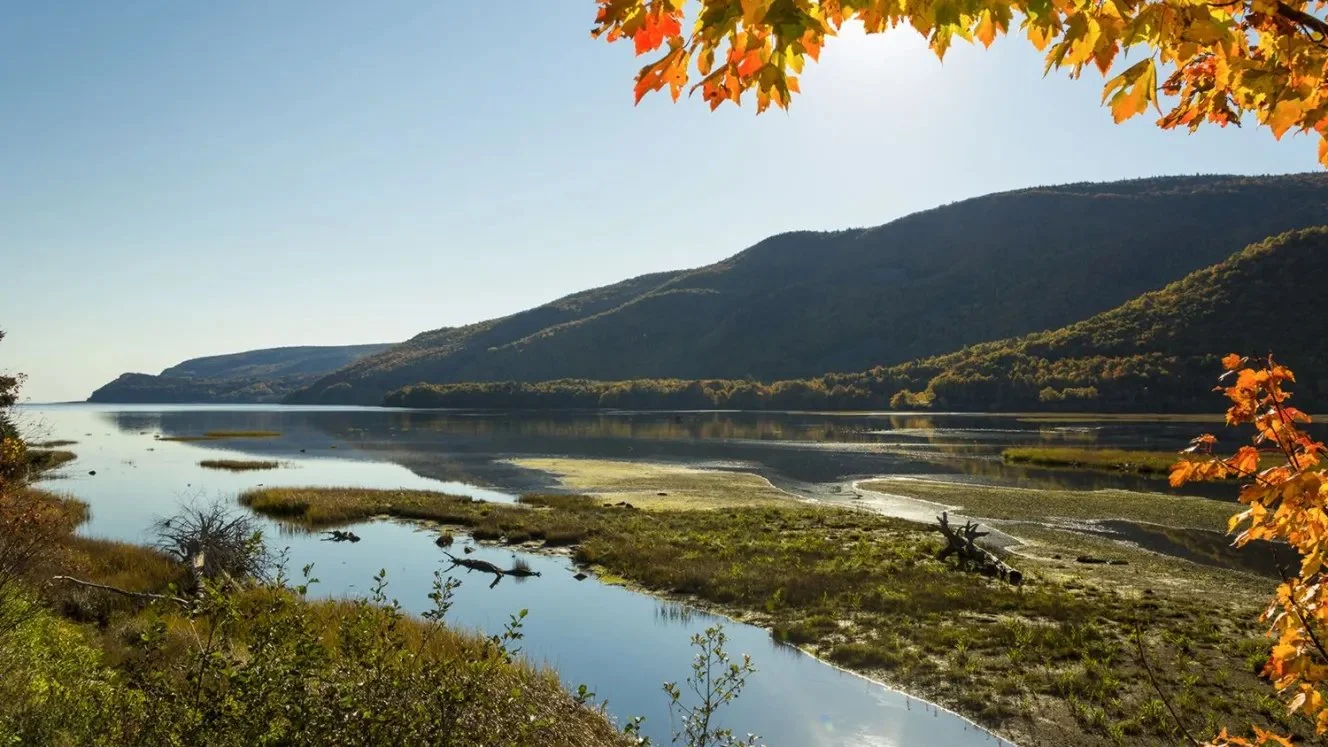
Image: Barrett & Mackay / Getty
The Sunday Times | March 2016
Island hopping in Nova Scotia on a kayak-and-camping odyssey
The Eastern Shore of Canada’s Nova Scotia is one of the least populated and most beautiful spots in North America – and kayaking nirvana
What we’ll be able to achieve over the next few days depends a lot on the ability of the group,” our guide says, kneading his grey whiskers and sizing us up. “I can see just from looking at you that that’s pretty low.”
Meet Dr Scott Cunningham. Cantankerous, scalpel-sharp and as dry as the interior of the battered kayak in which he has spent 30 years plying Nova Scotia’s bewilderingly serrated coastline.
We’re standing (a little uneasily now) on the sloping lawn of Scott’s water-edge property in the hamlet of Tangier, from where he runs Coastal Adventures, the province’s oldest kayak-hire and expedition company.
The plan is to spend the next few days exploring and camping out on the maze of uninhabited islands that smudge the horizon. The exact itinerary is subject to the whims of the weather (and, I’m sensing, the guide). But two things are certain: one, there isn’t going to be much passing traffic. This is one of the most sparsely populated areas in North America. And, two: one way or another, it’s going to be entertaining.
On the foreshore, beneath a cloudless sky, we stow tents, sleeping bags and provisions in the snug hatches of our 16½ft kayaks, then launch. Scott has some final words of encouragement as we attach our spraydecks. “Remember, if you capsize, do not, whatever you do, let go of the boat,” he says. “Customers are a dime a dozen, but those boats — they’re expensive.”
The faint imprint of civilisation fades and, sheltered by the outer islands, the water is calm. We settle into our paddling, the rhythmic slap of water on hull lulling us into a trance.
As we paddle, we chat. With the exception of Ian, 13 — son of Scott’s friend Matt — and myself, most of the group are 50-plus. Some, like Scott, are north of 60. This is Canadian years, though: to convert, you roughly divide by two. They’re fit, dauntingly capable and as at home in a kayak as your average British sixtysomething is in a National Trust tearoom.
We enter a narrow corridor between two thickly forested islands, an osprey watching us guardedly from its penthouse nest. Old man’s beard clings to the branches of the trees like candyfloss blown from a distant funfair, a legacy of the cloying summer fog that the region is renowned for. We, to my slight disappointment, are to experience only clear skies and warm sunshine.
With the heat rising, we approach a compact little island and haul up on its white-sand beach. It’s deserted, though it does bear the hallmarks of, in relative terms, recent activity: a 17th-century shell midden left by the native Mi’kmaq, who navigated these waters in their birchbark canoes. That it’s just piled there, barely touched, speaks volumes for the footfall.
