
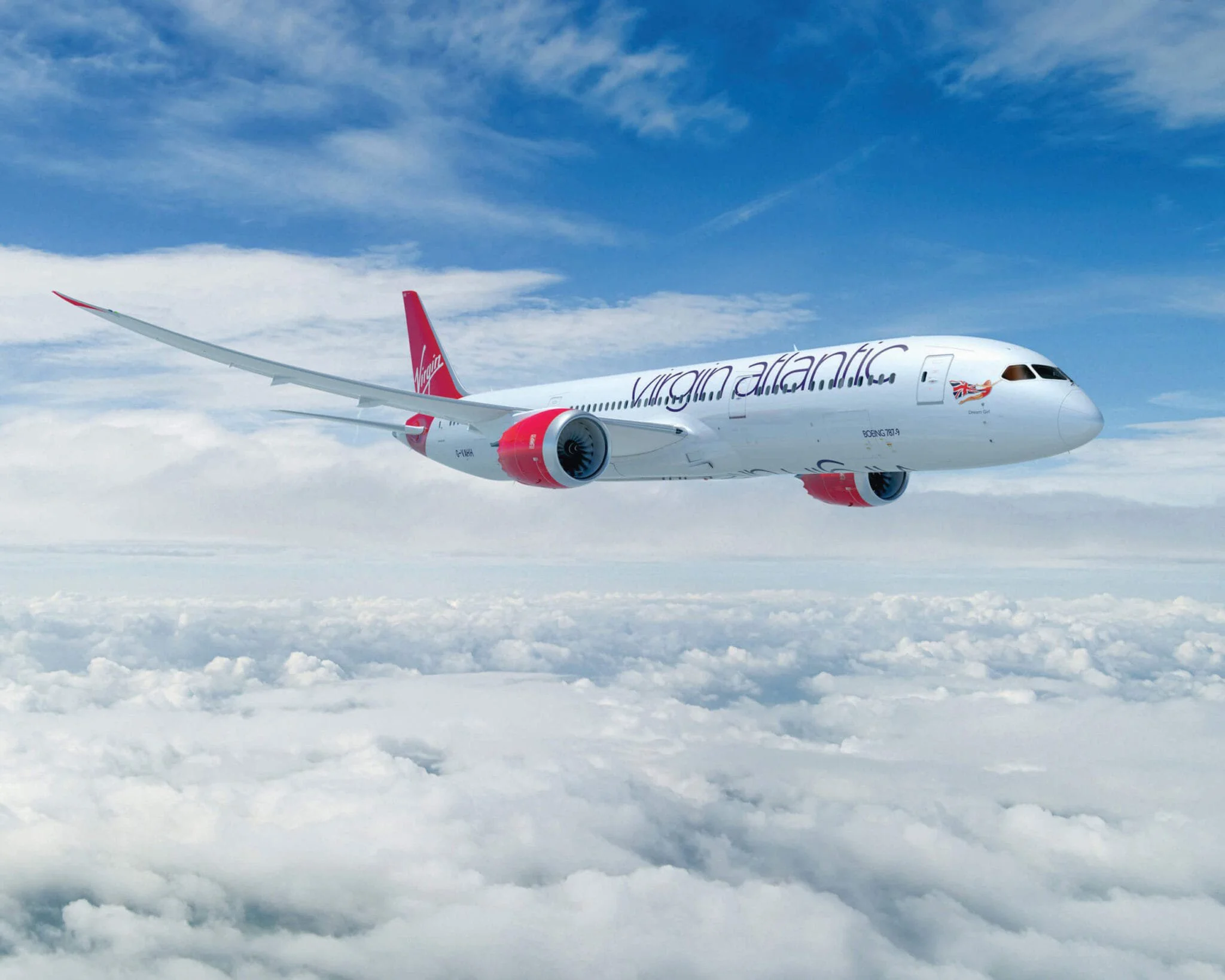
Image: Virgin Atlantic
Delayed Gratification | December 2023
Flights of fancy?
Sustainable alternatives to jet fuel are starting to come onstream. But how likely are these ‘fuels of the future’ to come to the planet’s rescue?
In the tinderbox summer of 1984, the notorious Battle of Orgreave saw 8,000 pickets and 5,000 police converge at a coking plant on the eastern fringes of Sheffield. The miners were protesting prime minister Margaret Thatcher’s plan to modernise and deregulate the coal industry, fearful that it would lead to mass closures. The violence that ensued was the bloody dénouement to the miners’ strike, and the housing estate that now sits on the former battlefield is a brutally anodyne reminder of which side ultimately prevailed.
Forty years on, and just a few hundred yards away, another high-stakes battle is being waged, with fossil fuels once again at the centre: the decarbonisation of global aviation. This is the site of Sheffield University’s Energy Institute, where organisation head Professor Mohamed Pourkashanian and his team are at the vanguard of the embryonic Sustainable Aviation Fuel (SAF) sector.
The broadest of umbrella terms, SAF encompasses all types of alternative aviation fuel made from non-fossil ‘feedstocks’ (raw materials). These might include cooking oils, plant sugars, forestry residue, even human excrement. Chemically similar to, and visually indistinguishable from, conventional jet fuel, they create a fraction of the carbon footprint.
The Energy Institute’s mission is as daunting as it is critical: to develop, test, regulate and enable the rapid upscaling of SAFs in the hope that they can break traditional jet fuel’s environmentally destructive hegemony and drive the trillion-dollar aviation industry towards its target of net zero by 2050. The quest received a significant PR boost on 28th November 2023 when Virgin Atlantic’s #Flight100 – the first long-haul flight to be 100 percent powered by sustainable fuel – travelled from London to New York. “It was fantastic,” says Pourkashanian, who was one of the small number of scientists, politicians and journalists invited on board. “It felt like any other flight, only the fuel it used would have produced 70 percent lower CO2 emissions over its life cycle. But I believe we can go much further than that.”
It was a great proof of concept, he says, demonstrating that a plane can be safely flown entirely on sustainable fuel. Efficiently, too; one of the big selling points of SAF is that it is “drop-in”, meaning it can be blended in any concentration with traditional jet kerosene and doesn’t require modifications to aircraft or refuelling infrastructure.
Shai Weiss, chief executive of Virgin Atlantic, described #Flight100 as “momentous”. Michael O’Leary, CEO of Europe’s biggest low-cost airline Ryanair, wasn’t so sure. The pioneering fight was powered by so-called biofuels, the most developed branch of SAF, in this case derived largely from waste fats. This feedstock, argued O’Leary, is vanishingly scarce when measured against the insatiable thirst of global aviation.
“I don’t see where we will get the supply in the volumes we need,” he railed, in a characteristically forthright interview with the Guardian. “You want everybody running around collecting fucking cooking oil? There isn’t enough cooking oil in the world to power more than one day’s aviation.” Pourkashanian – calm, analytical, with the measured, reassuring tone of an airline captain – smiles when I put this to him. “The thing is, he’s not wrong,” he says. “But it’s a red herring because that is only one way of producing sustainable aviation fuel.”
The branch of SAF most likely to deliver aviation into the elusive embrace of net zero, says Pourkashanian, is Power to Liquid (PtL). So great is its potential that it could meet the needs of the entire UK aviation industry by 2030, he believes – far exceeding the incremental SAF targets that are being adopted across the industry.
PtL sees hydrogen, extracted from water using renewable energy, blended with carbon taken from industry or the atmosphere. A chemical process known as the Fischer-Tropsch reaction (FT) combines the feedstocks to produce a synthetic kerosene that delivers a minimum of 90 percent less CO2 in lifecycle terms. The carbon double win – both vastly reducing emissions and hoovering them up – is what has got everyone excited; loosely analogous to an electric car that draws its power directly from the exhaust of your chugging family diesel.
During a hard-hat tour of the Energy Institute’s shinily inscrutable buildings I get to see each step of this remarkable alchemy in isolation. Pourkashanian and his team are based in the Lego-block Translational Energy Research Centre (TERC), officially opened in January 2024. Next door is the larger Sustainable Aviation Fuels Innovation Centre (SAF-IC), the UK’s first clearing house for the testing and certifying of new SAFs. Out front, workers in high-vis are battling heavy winds as they lay the foundations for the £80m, Boeing-partnered Composites at Speed and Scale (COMPASS) facility. Clearly, you’re nothing in sustainable aviation without a snappy acronym.
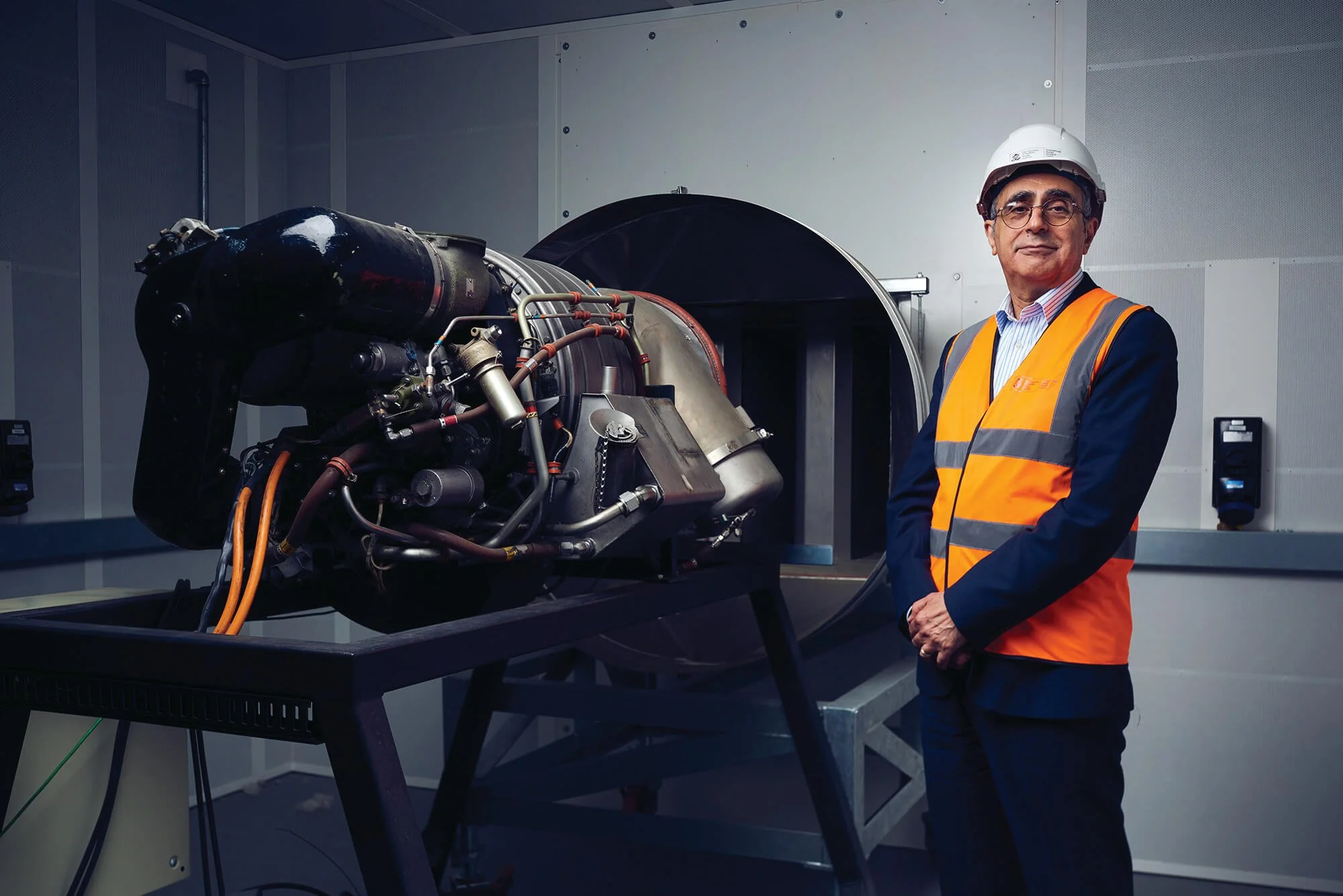
Image: University of Sheffield