Images: Danny North
Sunday Times Magazine | August 2024
Bay watch
How the RNLI is navigating choppy waters and culture wars in its 200th anniversary year
On the wall of James Anthony’s shed hangs a small wooden seat. It’s from a rowing eight, one of the sleek racing boats that are a regular sight on the stretch of the Thames in west London where the 56-year-old and his team of RNLI volunteers operate. The item is part keepsake, part memento mori — fished out of the swollen, bitterly cold river last November after a powerful ebb tide snapped the boat in two on one of the thick stone buttresses of Barnes railway bridge.
But it wasn’t the wreckage that had Anthony and his colleagues racing to the site on a gloomy winter’s evening. It was the nine teenagers clinging to it.
“All the boys were in the water and pinned against the bridge by the tide,” Anthony says. “There was no way of them getting out of that situation. I remember as we approached thinking, ‘Yep, this is going to be a tricky one.’ ”
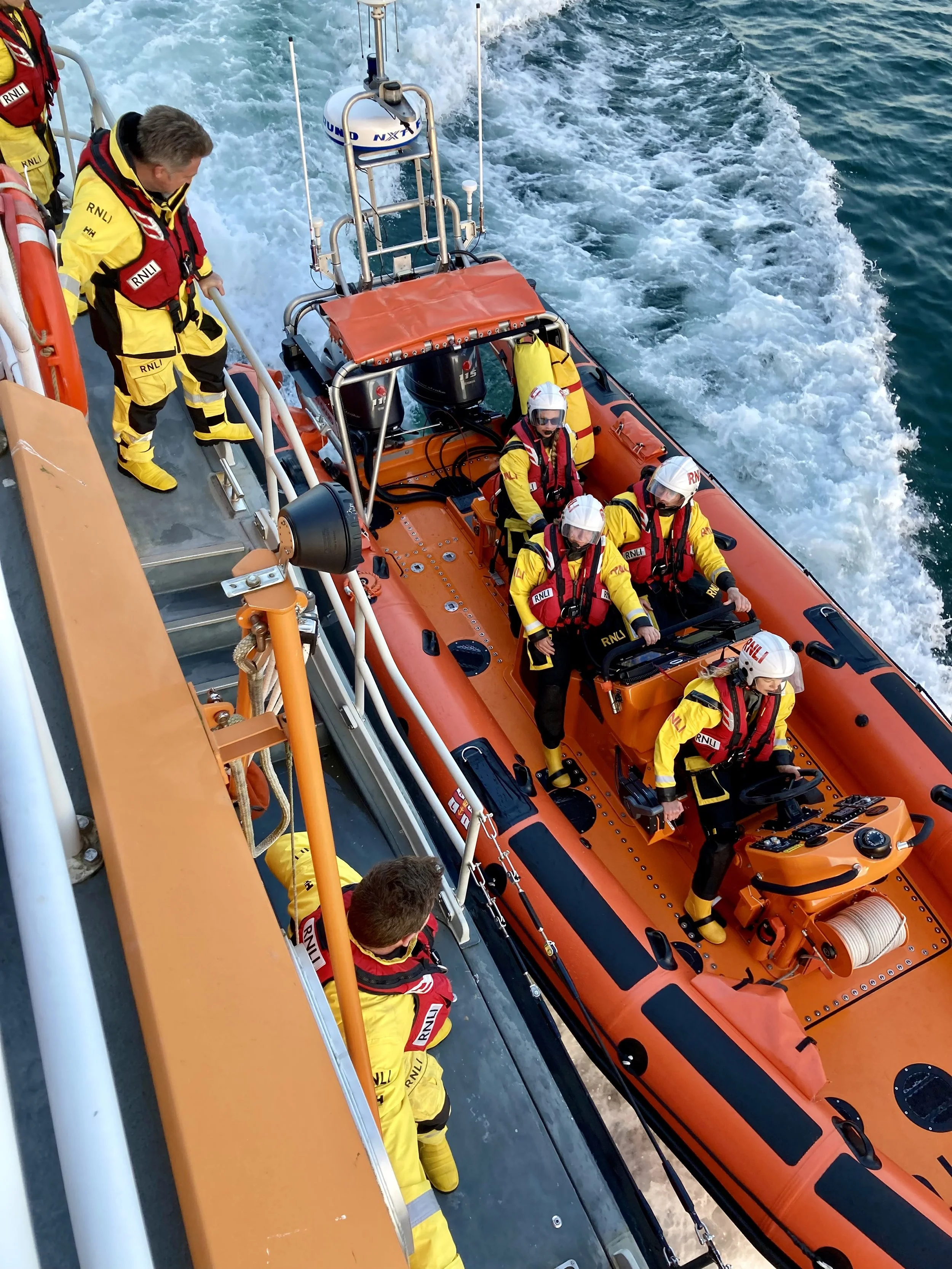
Anthony’s team had been scrambled from Chiswick Lifeboat Station, half a mile downriver. The base operates an E Class Mk 2 lifeboat, the most advanced vessel in the RNLI fleet — capable of 40 knots yet agile enough to stop in a boat length. Crucially, it’s powered by water jets rather than propellers, reducing the risk to casualties in the water. It was the perfect boat for the rescue that unfolded.
“You’ve got young human heads, a big, heavy boat and a bridge. There’s only one outcome if things go wrong,” says Anthony, who was helming the vessel. As he fought to keep the boat in position, the nine teenagers — rendered mute and in some cases unresponsive by shock and cold — were pulled on board one by one; three from one side of the buttress, six from the other. Then the boys, a school rowing team on a training session they’d never forget, were cloaked in towels and sped back to base for medical treatment.
From the initial 999 call to all nine casualties being safely landed on the lifeboat station’s pontoon took 11 minutes. A member of the public who witnessed the rescue went home and immediately donated £500.
“We don’t usually go to the pub after a shift,” Anthony says. “We did that night.”
It’s June and, sitting on the balcony of the Chiswick station, the scene Anthony paints of that November evening is hard to conjure. It’s nearly 30C and the Thames exudes an almost Mediterranean lustre. But there’s no ignoring the lethal tide; over Anthony’s shoulder it can be seen sliding past insidiously, easily outpacing the lunchtime joggers on the Thames Path. At its most extreme, the water level in the river rises seven metres in six hours. Little wonder that London, in RNLI terms, is regarded as a coastal city.
The nine lives saved that November night by Anthony and his team take their place in a tally that, over the lifespan of the RNLI — founded 200 years ago this year — stood at 146,277 at the last count in March. It’s a remarkable legacy for a charity established by the Quaker and philanthropist Sir William Hillary in response to the near 2,000 ships a year being lost to the unpredictable seas and viciously serrated coastline of the British Isles in the early 19th century.