

Images: Nature Picture Library/Alamy; homepage - Roger NorumDelayed Gratification | July 2024
The back-up plan
A proposal to preserve every one of Earth’s animal and plant species in a repository on the Moon sounds like something from the outer orbits of science fiction. But the concept is as feasible as it is critical, finds Duncan Craig
THE neat wedge of concrete protruded from the side of the icy mountain like the exposed corner of an enormous buried portrait. Above its stark, steel doors, a rectangular art installation resembling a pane of glass mid-shatter glowed a warming shade of Northern Lights green – the only splash of colour in an otherwise monochromatic world of omnipresent snow and perpetual dark.
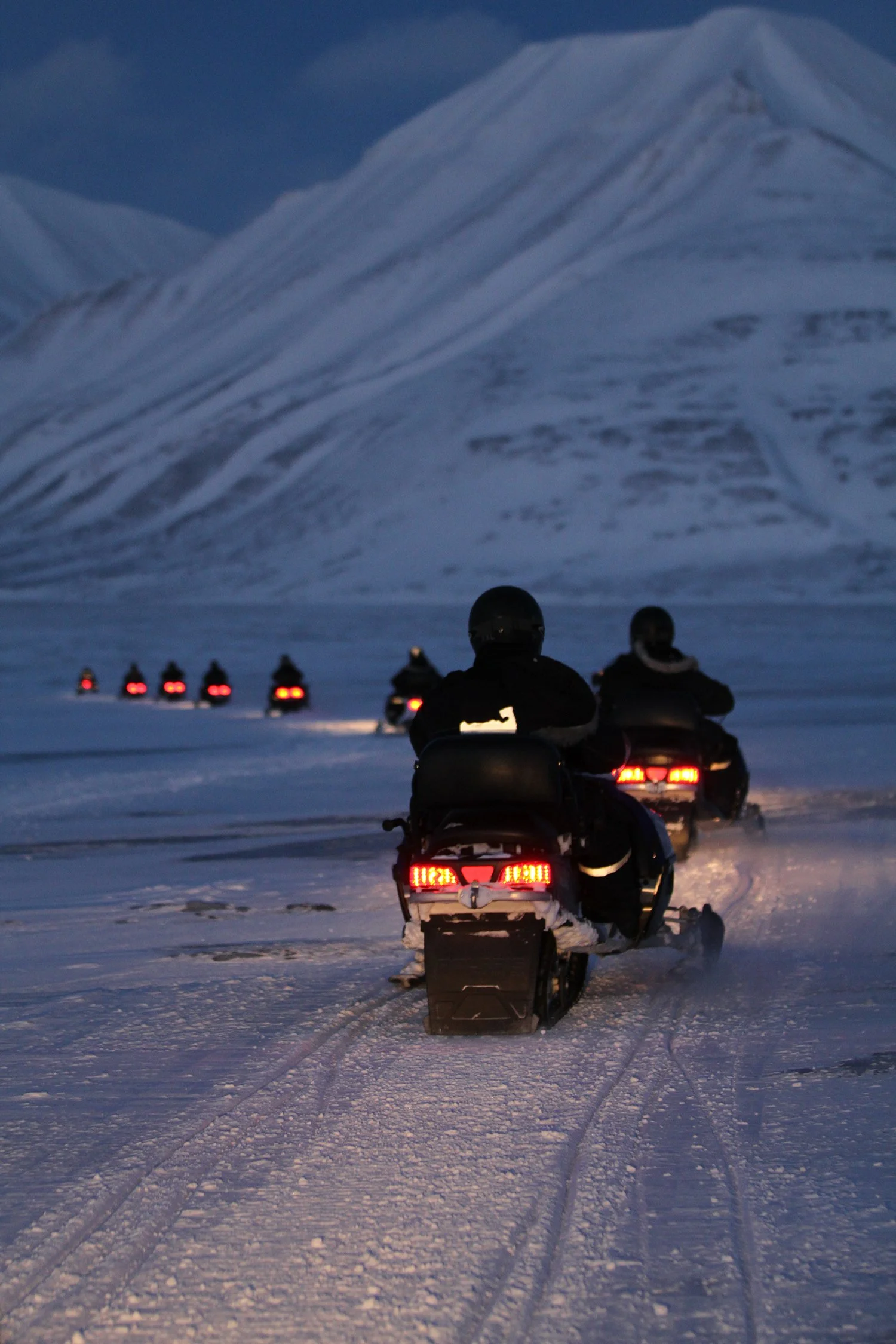
I’d come to Svalbard, Norway’s enigmatic Arctic Circle archipelago, on a newspaper assignment, and the newly opened – or rather newly hermetically sealed – Global Seed Vault was the first stop on our skidoo tour. It sits a few kilometres west of Longyearbyen, Svalbard’s primary settlement. In true iceberg tradition, what you see is just a fraction of its bulk.
Buried 150m down in the permafrost, at the end of a sequence of airtight doors, tunnels and craggy, white-washed antechambers, are duplicates of 1.3 million seed samples from almost every corner of the globe.
Worldwide, more than 1,700 genebanks hold collections of food crops for safekeeping. Yet the vulnerability of these to natural disasters and, increasingly, manmade destruction – Ukraine’s seed bank was bombed in 2022 – inspired this vitally innovative repository. To use a computational analogy, this is the external hard-drive on which nearly all the crops of the world are backed up.
My group was granted a peek through the main doors, then mingled outside, taking photos of the entrance and admiring the subtle, ethereal glow of the polar night. Even through my thermal layers and thick snow boots, I was conscious of the biting cold. This is one of the reasons the seed vault’s here. Or rather it was.
In the years since the vault was unveiled in 2008, temperatures in Svalbard have risen ominously. The August monthly average in 2022 was 6.9C. In 2023 it hit an unprecedented 8.4C – a record that lasted all of 12 months. This year, the August average was 11C.
This accelerated warming has led to a thawing of the permafrost and even a meltwater ingress to the outer edges of the vault, necessitating expensive modifications. There are fears that what was envisaged as something that would last “for eternity” may not even be fit for purpose within a few decades.
Global warming’s ambush of Svalbard and its seed vault is something that Dr Mary Hagedorn, Senior Research Scientist at the Smithsonian Institution, has watched with interest and alarm. She has long felt that Earth is way too precarious a planet on which to safeguard its own biodiversity indefinitely. For such a back-up to be truly effective, she believes, it needs to be “off-world”.
During the pandemic, Hagedorn, 70, mobilised a group of fellow scientists from the Smithsonian and US bodies such as the Center for Earth and Planetary Studies and National Science Foundation to address the feasibility of a lunarbiorepository not just for plants and seeds but for all animal life, too. Their resulting paper, published in the journal BioScience in August, proposed targeting the south pole of the Moon, where the temperature of -196C needed to preserve living cells is readily available, and unwaveringly so; the Moon has no atmosphere and so is impervious to climate change.
“We ultimately want to have all the life species up there,” Hagedorn tells me, from her home in Hawaii. The idea would be to start by prioritising animal groups threatened with extinction – there are 23,250 such species on the International Union for Conservation of Nature (IUCN) red list, for example – and those that serve pivotal roles in wider food chains, then scale up from there. “Think of it like assembling a natural history museum,” says Hagedorn. “It’s not made overnight – you collect over time.”
The idea of boldly harnessing the potential of our natural satellite has been a mainstay of science fiction for decades. Does she truly believe that this proposed repository – part lunar deep-freeze, part dry-docked Noah’s Ark – is feasible? Or is it just pie (238,000 miles up) in the sky?
“I wouldn't have gone to all the trouble of organising a group and writing a paper if this was just a sort of theoretical exercise for us,” she says, solemnly. “We’re all committed to the idea of doing something that’s concrete, something we can make work.”
She adds: “The governance and the ethics and choosing what should go up there and when…that’s going to take time. But in terms of the actual physical ‘can we do this?’ – then, yes, absolutely. And probably within the next five to eight years.”
Roger Norum