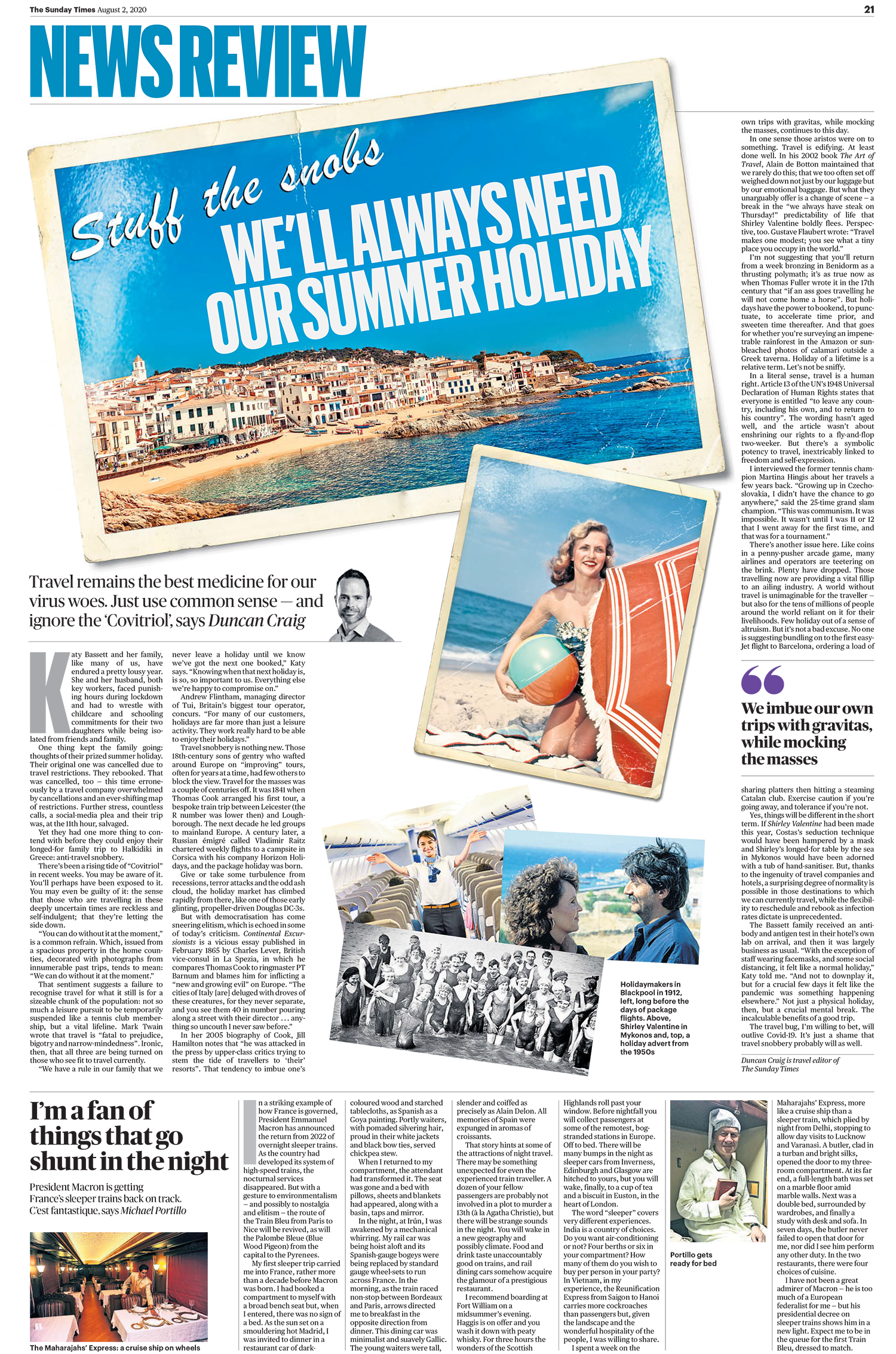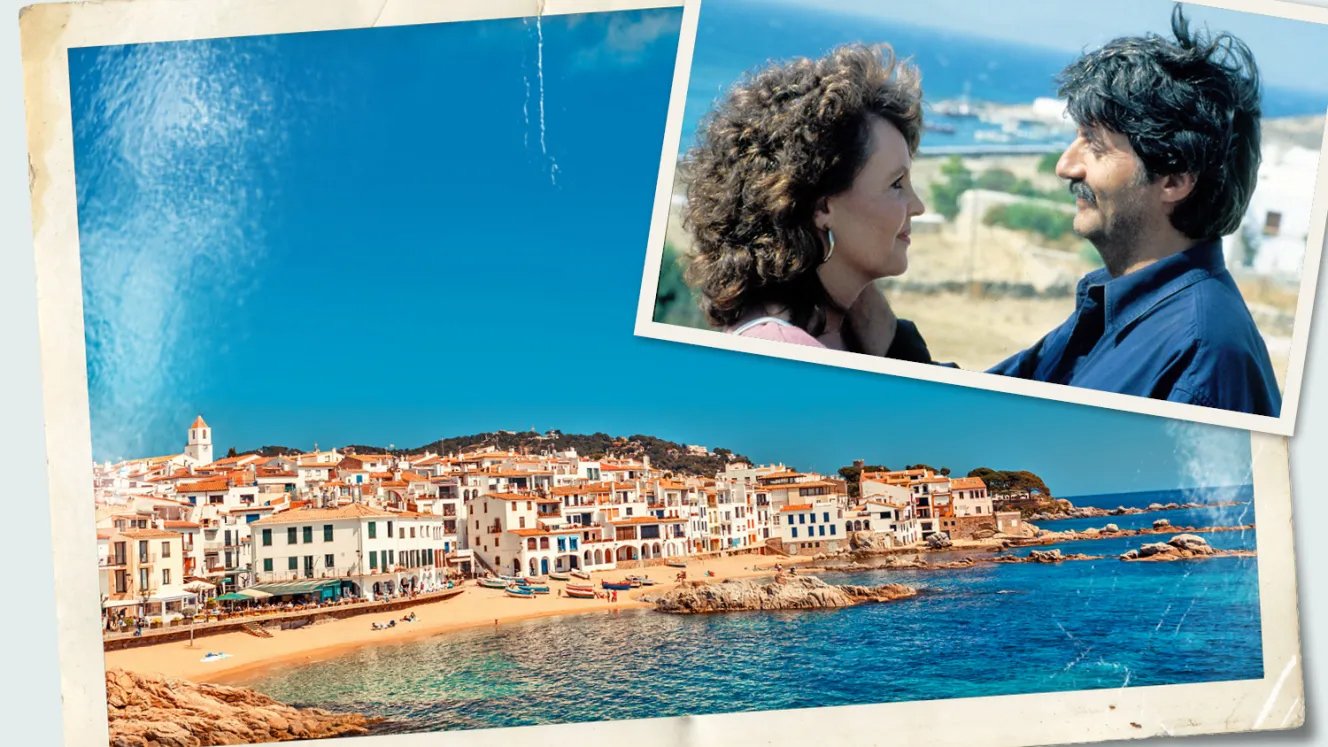
Images: Moviestore/Rex/Shutterstock
Sunday Times Review | August 2020
Stuff the snobs – we’ll always need our summer holiday
Travel is the best medicine for our virus woes. Just use common sense – and ignore the ‘Covitriol’, says Duncan Craig
Katy Bassett and her family, like many of us, have endured a pretty lousy year. She and her husband, both key workers, faced punishing hours during lockdown and had to wrestle with childcare and schooling commitments for their two daughters while being isolated from friends and family.
One thing kept the family going: thoughts of their prized summer holiday. Their original one was cancelled due to travel restrictions. They rebooked. That was cancelled, too — this time erroneously by a travel company overwhelmed by cancellations and an ever-shifting map of restrictions. Further stress, countless calls, a social-media plea and their trip was, at the 11th hour, salvaged.
Yet they had one more thing to contend with before they could enjoy their longed-for family trip to Chalcidice in Greece: anti-travel snobbery.
There’s been a rising tide of “Covitriol” in recent weeks. You may be aware of it. You’ll perhaps have been exposed to it. You may even be guilty of it: the sense that those who are travelling in these deeply uncertain times are reckless and self-indulgent; that they’re letting the side down.
“You can do without it at the moment,” is a common refrain. Which, issued from a spacious property in the home counties, decorated with photographs from innumerable past trips, tends to mean “we can do without it at the moment”.
That sentiment suggests a failure to recognise travel for what it still is for a sizeable chunk of the population: not so much a leisure pursuit to be temporarily suspended like a tennis club membership, but a vital lifeline. Mark Twain wrote that travel is “fatal to prejudice, bigotry and narrow-mindedness”. Ironic, then, that all three are being turned on those who see fit to travel currently.
“We have a rule in our family that we never leave a holiday until we know we’ve got the next one booked,” Katy says. “Knowing when that next holiday is, is so, so important to us. Everything else we’re happy to compromise on.”
Andrew Flintham, managing director of Tui, Britain’s biggest tour operator, concurs. “For many of our customers, holidays are far more than just a leisure activity. They work really hard to be able to enjoy their holidays.”
Travel snobbery is nothing new. Those 18th-century sons of gentry who wafted around Europe on “improving” tours, often for years at a time, had few others to block the view. Travel for the masses was a couple of centuries off. It was 1841 when Thomas Cook arranged his first tour, a bespoke train trip between Leicester (the R number was lower then) and Loughborough. The next decade he led groups to mainland Europe. A century later, a Russian émigré called Vladimir Raitz chartered weekly flights to a campsite in Corsica with his company Horizon Holidays, and the package holiday was born.
Give or take some turbulence from recessions, terror attacks and the odd ash cloud, the holiday market has climbed rapidly from there, like one of those early glinting, propeller-driven Douglas DC-3s.